Filler Masterbatch: Composition, Benefits and Industrial Applications
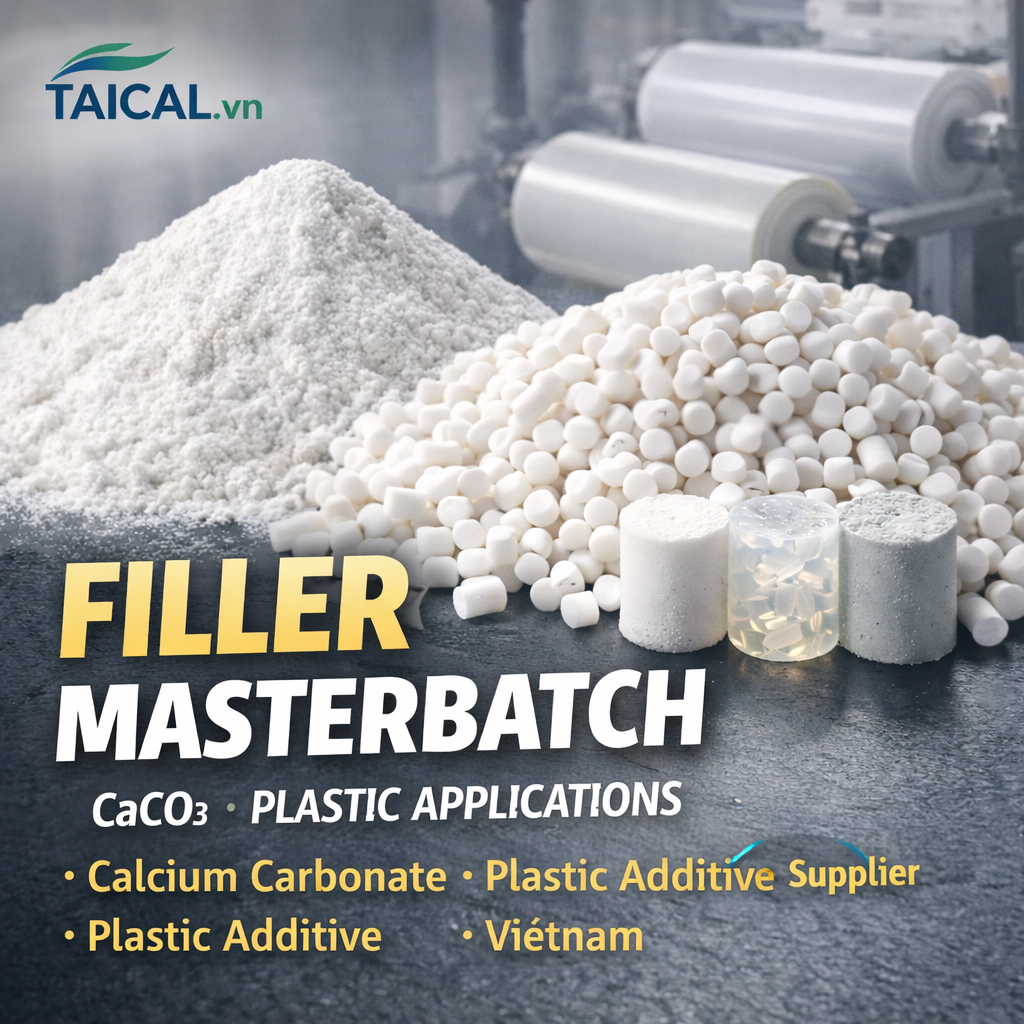
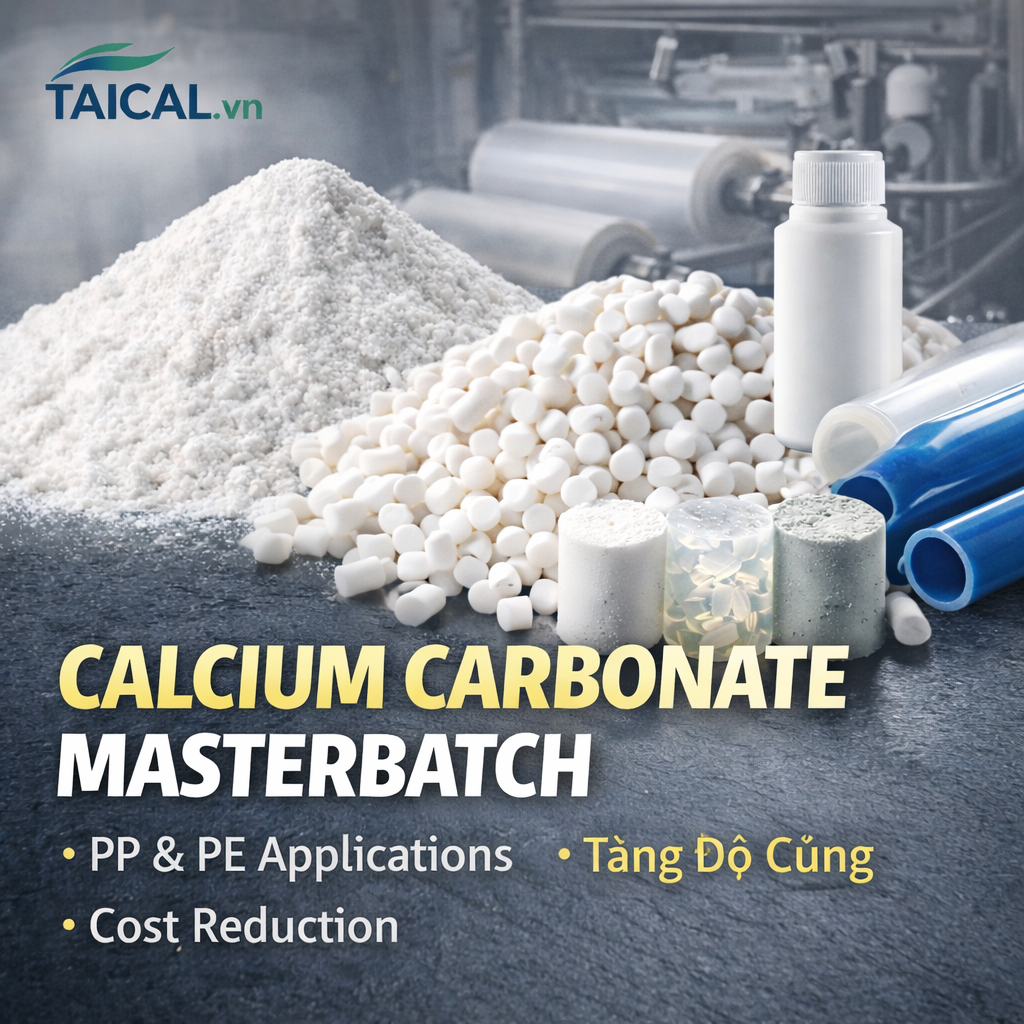
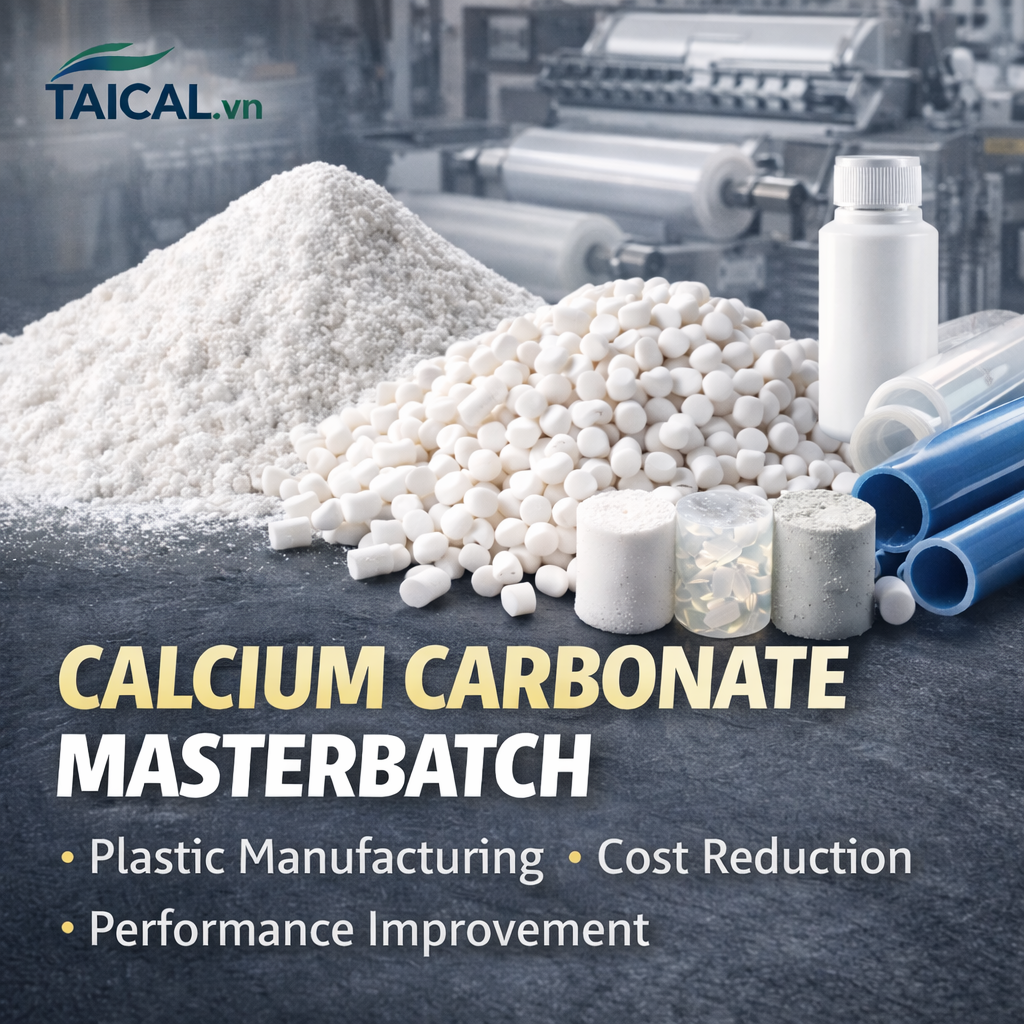
Filler masterbatch is one of the most widely used plastic additives in modern manufacturing. It helps plastic producers reduce raw material cost, improve stiffness, and enhance processing efficiency in a wide range of plastic applications.
At Taical.vn, filler masterbatch solutions are designed for different plastic production lines including blown film, injection molding, extrusion and sheet production.
What Is Filler Masterbatch?
Filler masterbatch is a compound made of:
- Calcium carbonate (CaCO₃)
- Carrier resin such as PE or PP
- Dispersion additives
The calcium carbonate content typically ranges from 70% to 85%, depending on the final application requirements.
Main Advantages of Filler Masterbatch
- Reduce production cost
- Increase product stiffness
- Improve dimensional stability
- Enhance extrusion output
- Reduce shrinkage during cooling
Applications of Filler Masterbatch in Plastic Industry
1. Blown Film Production
Used in shopping bags, garbage bags, agricultural films and packaging films.
2. Injection Molding
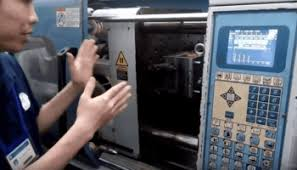
Applied in household plastic products, chairs, containers, and industrial components.
3. Pipe and Sheet Extrusion
Improves rigidity while maintaining cost efficiency.
Recommended Loading Ratio
- Blown film: 5% – 20%
- Injection molding: 10% – 30%
- Extrusion: 15% – 35%
How to Select High Quality Filler Masterbatch
- Fine CaCO₃ particle size
- Stable whiteness
- Good dispersion performance
- Compatible carrier resin
Why Taical Filler Masterbatch?
Taical provides customized filler masterbatch solutions for different production technologies:
- High-speed blown film filler
- Injection molding filler compound
- Filler for smooth surface products
Stable formulation and application-specific optimization help manufacturers improve long-term production consistency.
Conclusion
Filler masterbatch has become an essential material in modern plastic production. Choosing the right filler formulation directly affects final product quality, machine efficiency and cost control.
Tony Thái (Mr) – Industrial Management Engineer